
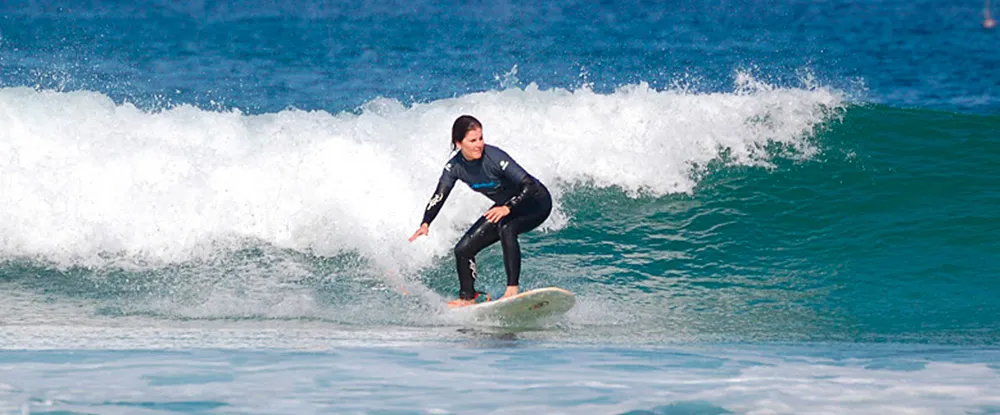
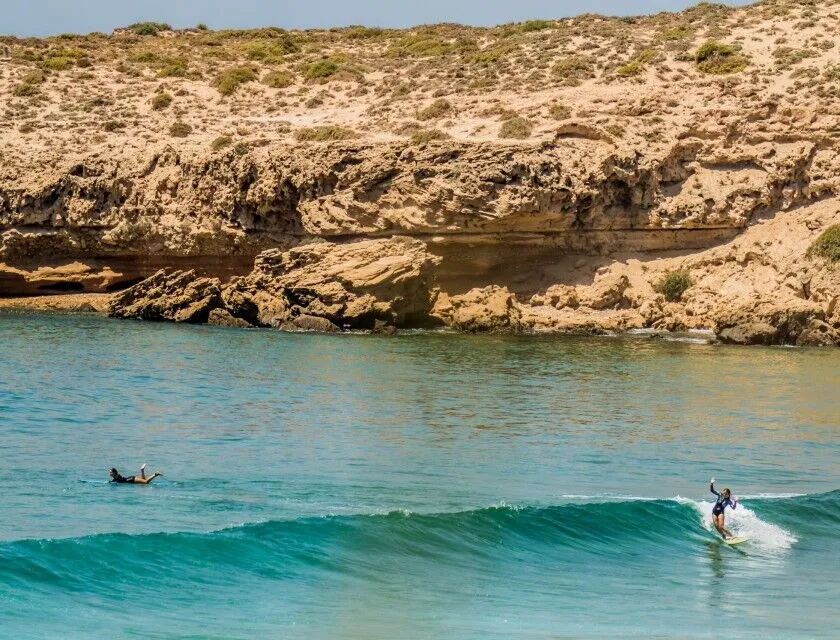
Location & Setting
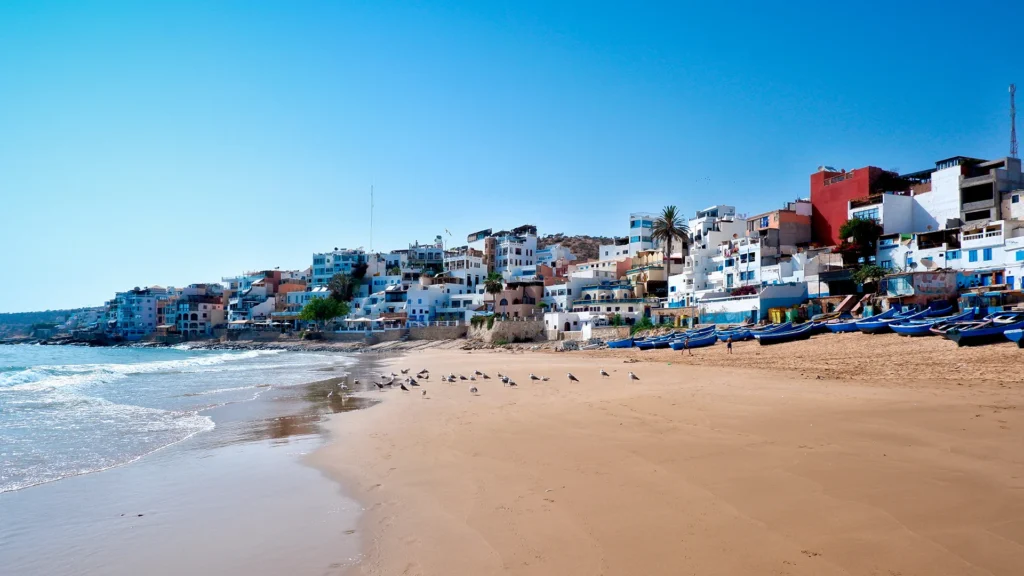
Devil’s Rock (also called Imouran) sits approximately 3 km south of Taghazout and 14 km north of Agadir, just off the N1 coastal road near Aourir’s river crossing.
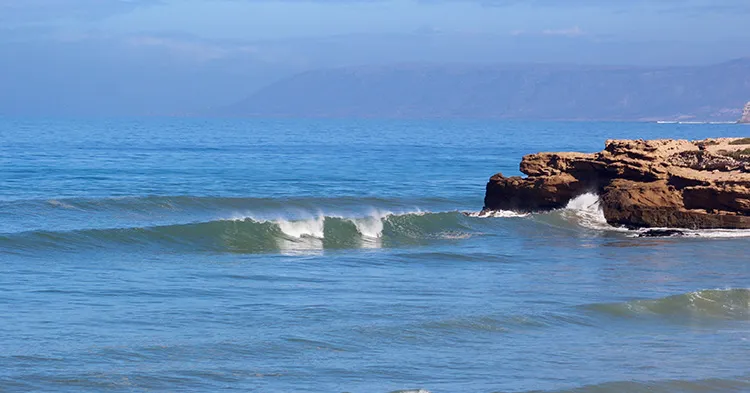
It’s named after a devil-resembling rock formation on the shore, giving the spot a dramatic cultural presence in the region . The area sees sandy shores with occasional hidden rocks beneath — offering both scenic beauty and mellow surf sessions.
Surf Conditions & Wave Character
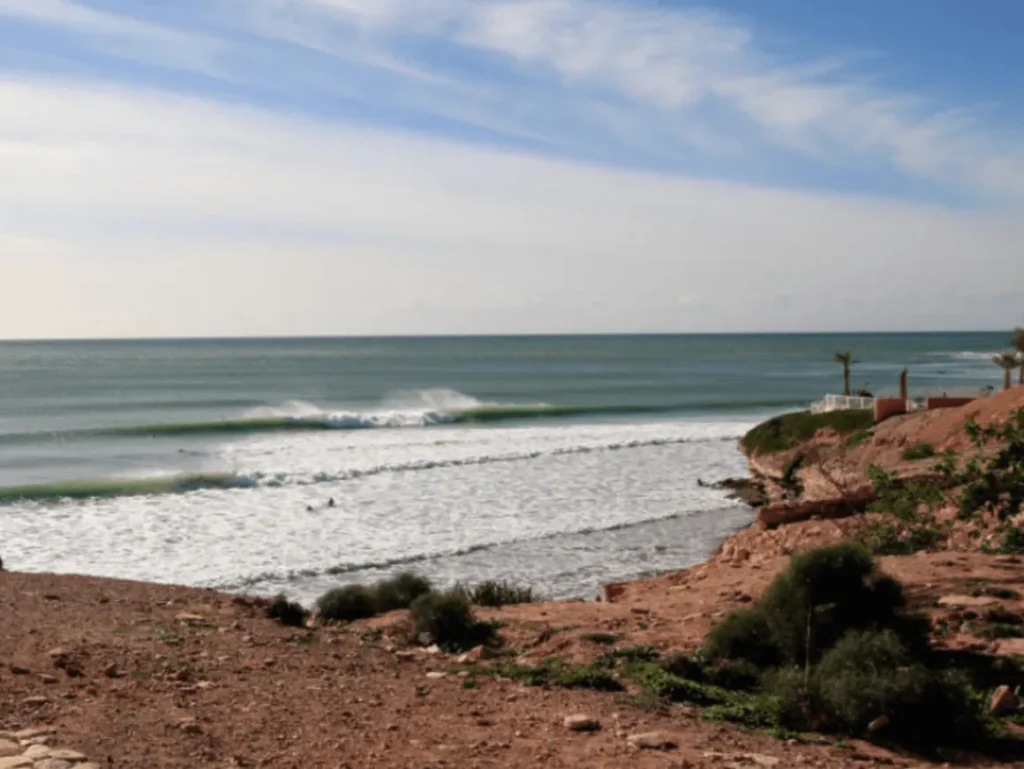
Wave Type: Friendly beach break with both left and right handers, breaking off the sand and reef cover .
Ride Length: Typically 50–150 m, depending on swell size and section formation .
Swell & Wind: Works best when swell comes from NW to SW, with N‑E to E offshore winds for clean surf .
Tide Preference: Surfable on all tides, with mid to high tide offering smoother, glassy waves — low tide may reveal rocks and currents.
Who Is It For?
All levels are welcome here:
- Beginners & Intermediates: Enjoy predictable easy take-offs and mellow walls — ideal for building confidence and learning technique.
- Advanced Surfers: On bigger swells (up to ~2 m), the outside sections offer punchier turns and wall sections, though it’s never as intense as spots like Anchor or Spiders.
Overall rating: around 6/10 for ride performance, but strong 8/10 consistency thanks to reliable swell and forgiving sand bottom.
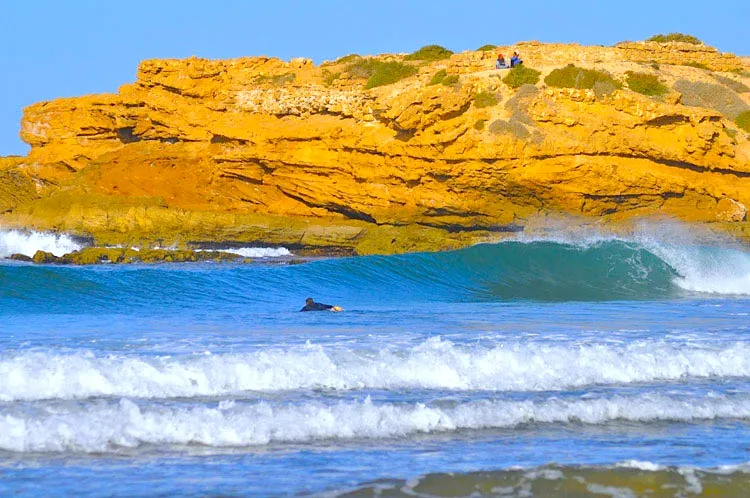
Spot Atmosphere & Local Culture
Away from the line-ups, Devil’s Rock is rich in local lore:
- Popularized by Berber names like Imourane Ahjareef (“rude rock”), it’s linked to legends of djinns and ancient warriors tasked with guarding the coast .
- Each September 1st, the Moussem d’Imourane is held here, where women participate in rituals involving the seven magical waves believed to invoke fertility and marriage blessings .
Beachside cafés serve fresh fish kebabs and local dishes — ideal for unwinding post-surf, and often schools for local kids run beginner lessons right on the sand.
Getting There & Practical Info
- Access: Just a 5–10 minute drive south of Taghazout or 15 minutes north from Agadir. Walkable from Tamraght village via a scenic coastal path.
- Parking: Available by the Atlantic campsite or near cafés; expect weekend buzz and some crowding due to surf schools .
- Facilities: Basic amenities include cafés offering meals and drinks; surf schools frequently operate from the beach .
Quick Overview Table
| Feature | Details |
|---|---|
| Wave Type | Beach break — both left & right |
| Ride Length | 50–150 m rides depending on conditions |
| Swell Range | From ~1 m beginners’ fun up to ~2 m punchy waves |
| Tide Preference | All tides; best around mid to high tide |
| Skill Level | All levels — beginner to advanced |
| Notable Hazards | Occasional reef under sand, currents, sea urchins |
| Crowd Level | Busy on weekends and surf lessons; calmer otherwise |
| Atmosphere | Laid‑back, friendly, with local myth & café culture |
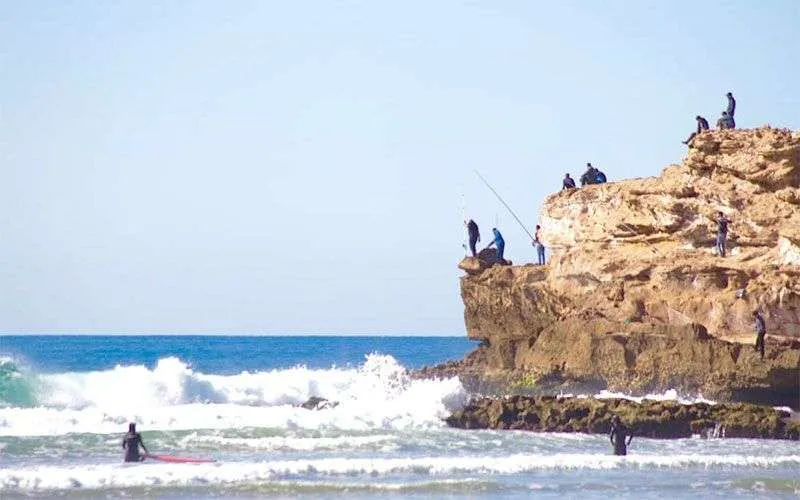
Surfer Tips & Local Advice
Start small: Kick off at the inside sections to develop confidence before venturing deeper into waves.
Time your session: Mornings offer calmer seas; weekends bring surf schools and lesson groups.
Gear up right: Bring booties for urchin-prone turf or paddle exits. Avoid barefoot runs over hidden reef or rocks.
Respect local lore: The Moussem d’Imourane is a centuries-old tradition worth honoring if visiting in September .
Try the cafés: Sampling seafood or mint tea near the rock gives cultural flavor beyond surfing.
Why Devil’s Rock Should Be on Your List
Devil’s Rock truly stands out as a go-to spot for surfers of all levels — offering reliable waves, sandy-friendly conditions, local warmth, and fascinating lore. Whether you’re learning your first ride or working on sharper turns, this spot balances accessibility and surf charm with vibrant coastal views.
Have you thought about comparing Devil’s Rock to nearby spots like Banana Point or Spiders? Or maybe adding a local surfer story or upcoming festival update? Let me know!